Wednesday, March 11, 2009

Dada Art versus Bad Art


As noticed I used the same artwork as I did in the previous question. As I said before, this painting is simple, and destroys the expression and the meaning of art; sending a message to an audience. Although it is bad, it well destroys meaning and expression of art, and that itself is a message. In the ‘BAD’ art it uses more elements of design and principles of design, but has no message what-so-ever. And if the artist was a Dada artist, he aim of destroying art would’ve been unsuccessful. Comparing the two paintings the dada art is simple and uses no elements of design and principles of design sending no message, but because he doesn’t use the elements of deisng and the principles of design shows a message, about art having no message. The second piece of artwork is trying to send a message, but is having trouble delivering, what makes this artwork bad is its lack of use of the elements of design and the principles of deisgn and in the end delivers no message.

Mocking Normal art

i agree with malika. her observation was very smart. I agree that bad art can mock normal art. i think that the frustration of the failing artists made them need to counter all that the successful artists worked on for so long
Both art pieces are repugnant and very unpleasent to the eye, I think that the art in both are really rejecting the aesthetic criteria or art. Both don’t try to balance both don’t try to ceate interesting line, both rely solely on nothing to generate good art. Both pieces of art tried to destroy art. I think they both really aid people lose their urge to look at good art.


Art is not bad art when it simply just looks disgusting. Art is bad when it has no meaning because then it is just like a picture that says absolutely nothing. The two painting I choose as bad art I think have absolutely no meaning. At the same time the two painting are not following the aesthetic criteria.
The one of the left is made out of lines and then has two people that don’t even look like people. The painting has no deeper meaning or at least not a clear one which makes it bad art in my opinion.
The painting on the right looks like it has been done with no thought of effort of any sort. The painting is not clear and looks like a blurry scenic scene which takes away from the beauty of it. The white blob on the side looks like a ghost or something that cannot be clearly made out which simply makes the painting look like nothing but smeared color everywhere. Aesthetic criteria aside this painting still has no meaning because it is not even clear enough to see.
No one in my opinion would bother to look at them for more than a second because they are in no way pleasing to the eye or have any meaning.
I agree with Shilpa -- bad art can simply be a mockery of other forms of art and it is different from art that wishes to state something completely random or obscure. Art that intentionally forgets about or ignores certain aesthetic criterions is not the same as art that is made to be 'bad'.
Marchel Duchamp’s “Fountain” Is not just a piece of art, it is more of a statement that states that art isn’t special, anyone can make it and it doesn’t even have to look good. Whereas the child painting on the right is just bad because it is not drawn nicely and does not appeal to anyone.
Artwork that simply ignores all aesthetic criteria and pursues its own direction of art is differs from “bad art”. Bad art can be considered as art that has no intention or purpose, and that makes fun of other art. For example, the Bicycle Wheel piece can be considered bad art since it simply is a bicycle wheel turned upside down and placed on a stool, and there is no visual deeper meaning to this piece. The art piece on the right, a ticking pedometer with an eye, can be interpreted to the viewer with various meanings. It is not simply a wooden pedometer that was already made before placed in the hands of the artist, but the artist added a bit of his own works into it by adding the eye, and can be seen as a watching eye staring back at the viewer.


I think the difference between making bad artwork and a bad artwork in general is more than just the final product. Basically, wanting to do bad artwork on purpose is DADAism. That is when you try to break all the rules of principles of design and the other things that make up art (such as balance, color, line, texture, unity, etc.). DADA Artists try ignoring those rules or not include them at all in their art works.
In just bad art, artists mostly do not intent to make it bad. They create art like any other artist, however, to many people it just doesn’t seem appealing. The Artist might like the way it looks, but it doesn’t mean that everyone else likes the way it looks.


The first image Objects Arranged According to the Laws of Chance (1916) by Hans Arp is a not bad art because even though the artist tried to ignore POD because that’s the way it supposed to be. The artist tried to ignore the POD but it’s almost impossible. The second image is graffiti. Even though some call it art I don’t think it is. It has line, colour, texture and shapes but there is no point to it. The first one was made by a real artist who must have though how it avoids the criteria and make the painting without it as much as possible. The graffiti artist just does whatever comes to their minds probably not knowing there is something like a criteria. Unlike graffiti that painting meant to be art, it isn’t something that just has elements from the criteria because it does. DADA unlike bad art was meant to be bad.

Monday, March 9, 2009

Artwork can either intentionally ignore the principles of design & the formal elements, or it can just purely be poorly done and unintentionally ignoring the composites of art. With the two images I have selected above, we can tell the difference between the two. The one on the left is what I have labeled as ‘bad’ art and the one on the left is a DADA piece of art. The bad art doesn’t depict anything to my knowledge, and nor does the DADA work. However, the bad art just looks like splats of painting on a canvas whereas the DADA artist, even though ignoring certain elements, has chosen to make his painting like that with the carved wood and there is a sense of unity with the lines all being the same size and thickness. The only unity we can see from the bad art is the white lining through the middle of the painting. The artist of the bad art has most certainly ignored most aspects of design, except for colour (he has stuck uniformly to three main colours - primary colours, and white). The DADA artist has purposely rejected principles of art by doing it on wood firstly, which limits the things you can to the work. It is the role of DADA artists to purposely ignore or reject some or all elements or principles of design, however if you are an artist and you do not belong to the DADA art movement, there needs to be a justifiable reason for why you have chosen to ignore the elements or principles.


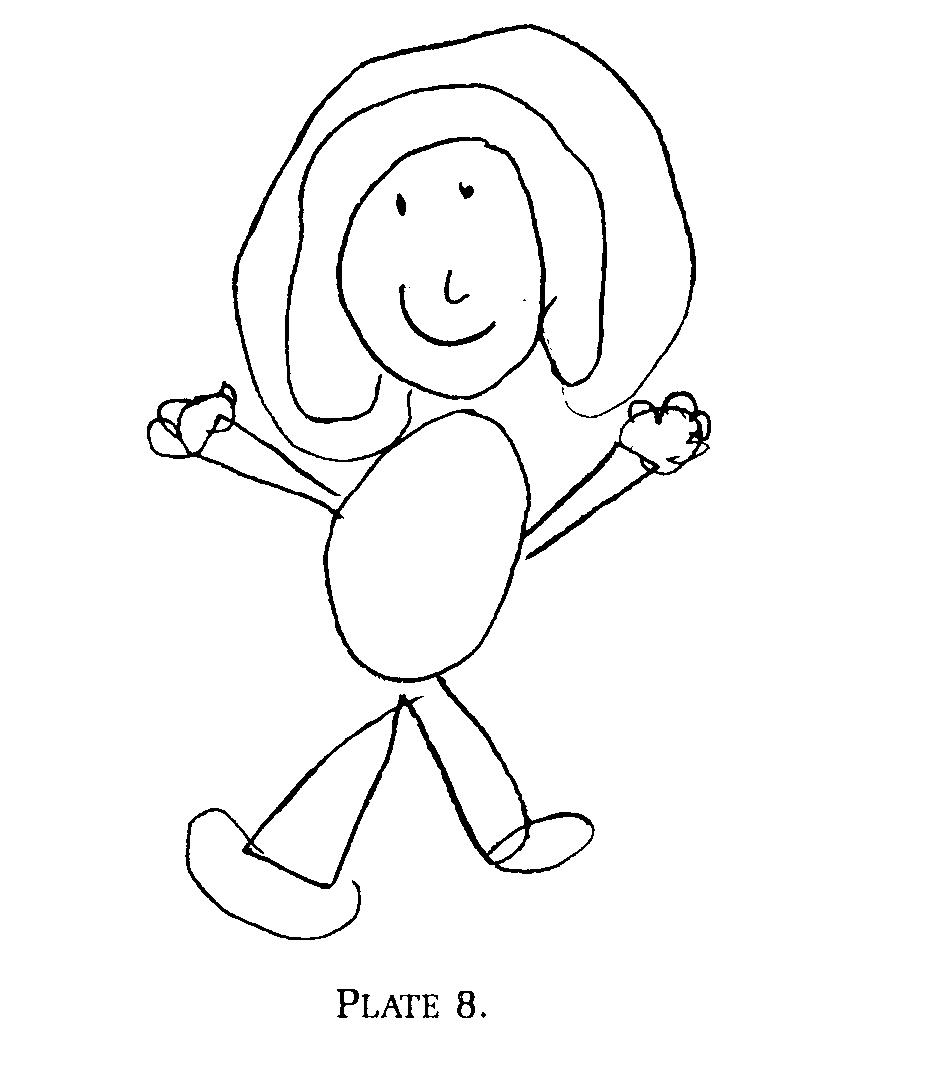
The difference between purposefully rejecting art and just creating “bad” art can be seen in the above two paintings. The first painting is by Hugo Ball, dada sound poem Gadli Beri Bimba . I think that his painting is a good example of purposefully rejecting the aesthetic criteria because it is obvious he has tried to make it very simple and dull. He has tried to ignore elements like line, value, color, shape, texture. Even though he has ignored them, there are still some elements there because no matter what all art will have some elements; it wouldn’t be art otherwise. The second painting however was drawn by a little kid who doesn’t have any idea what makes up the aesthetic criteria; the kid is just drawing for fun. He isn’t purposefully doing anything; he has just drawn a drawing of a little person. Even though Hugo Ball tried to ignore the aesthetic criteria, it’s still there which makes his painting trying to purposefully rejecting the aesthetic criteria while the second was just drawn for fun.

The Difference between purposely reject existing critera and simply "Bad" Art


Artwork that shows the difference between rejecting the aesthetic criteria and just being bad is something that people will in turn enjoy to see becauseit will allow them to understand how the artist thinks and how he/she feels about the world and its culture. The pop art painting doesn’t seem like it was made simply to advertise something to its viewers rather than for the viewers to make their own perceptions of the artist’s interpretation of the world. The painting on the left has elements of the exisiting aesthic criteria such as line, color, value, texture and shape—despite its efforts to move away from these critera. The DADA artwork shows an attempt to change the way things are and do things differently. The colors are very bright in the artwork on the left which would attract its viewer’s attention very quickly and easily. This makes it a lot easier to advertise something to them. Whereas the one of the left has more subdued colors that accentuate the painting but also makes it very subtle. The artwork on the left is quite unified and everything seems to be in its place. Each part of the puppet enhances the puppet as a whole. The one on the right, on the other hand seems as if it had been put together haphazardly. Each of the smaller parts of the work seem unconnected and random to the painting as a whole. And so the painting on the left by the DADA artist shows the difference between purposely rejecting existing criteria and just being “bad” art.


I think there is a significant difference between artwork that rejects the aesthetic criteria and artwork that is just plain bad. Art that purposely rejects the aesthetic criteria goes out of its way to not follow the principles of design meanwhile bad artwork doesn’t have to follow the principles but often does. This painting uses many different colors, lines and shapes. It also has a unique texture and many different values. Mana Lisa’s head is also in scale with the rest of the body and in proportion to the background. There is balance and Mana Lisa is emphasized over the rest of the painting. This proves that artwork can be bad whether it follows the aesthetic criteria or not. The other painting may destroy art with the rejection of the aesthetic criteria but it isn’t plain bad like Mana Lisa. It may look bleak and unattractive to the eye but it isn’t purely bad like Mana Lisa. Mana Lisa just shows a lack of skill and precision in art.
To Arya: I agree with the information in your post. Aesthetic criteria may be purposefully rejected but you can still often see these types of paintings in a museum where as the artwork of an infant may contain many things from the aesthetic criteria but is purely bad.

Monday, March 2, 2009


The art that has purposely rejected the aesthetic criteria still looks like art that you would find in a museum whereas the other one looks very random and amateur. The one on the left has elements of the esthetic criteria in it such as line, value, color, shape, texture and even though they were not meant to be done, it still uses them and it’s obvious. The one on the right uses them as well, but not to the same extent. Naturally there are things like line, shape and color that you practically can never avoid but that is it and so it doesn’t look very interesting. the artist of the work on the left is actually a professional artist, so they probably automatically include the criteria even though they are trying not to use it. The one on the right was made by a child, a person who probably has never heard of the criteria in their lives, so they tend to just do whatever they please. They don’t know any of the rules so they can go crazy. Even after trying to reject the criteria, the artwork on the left still looks better than the one on the right even though the one on the right could use the aesthetic criteria.