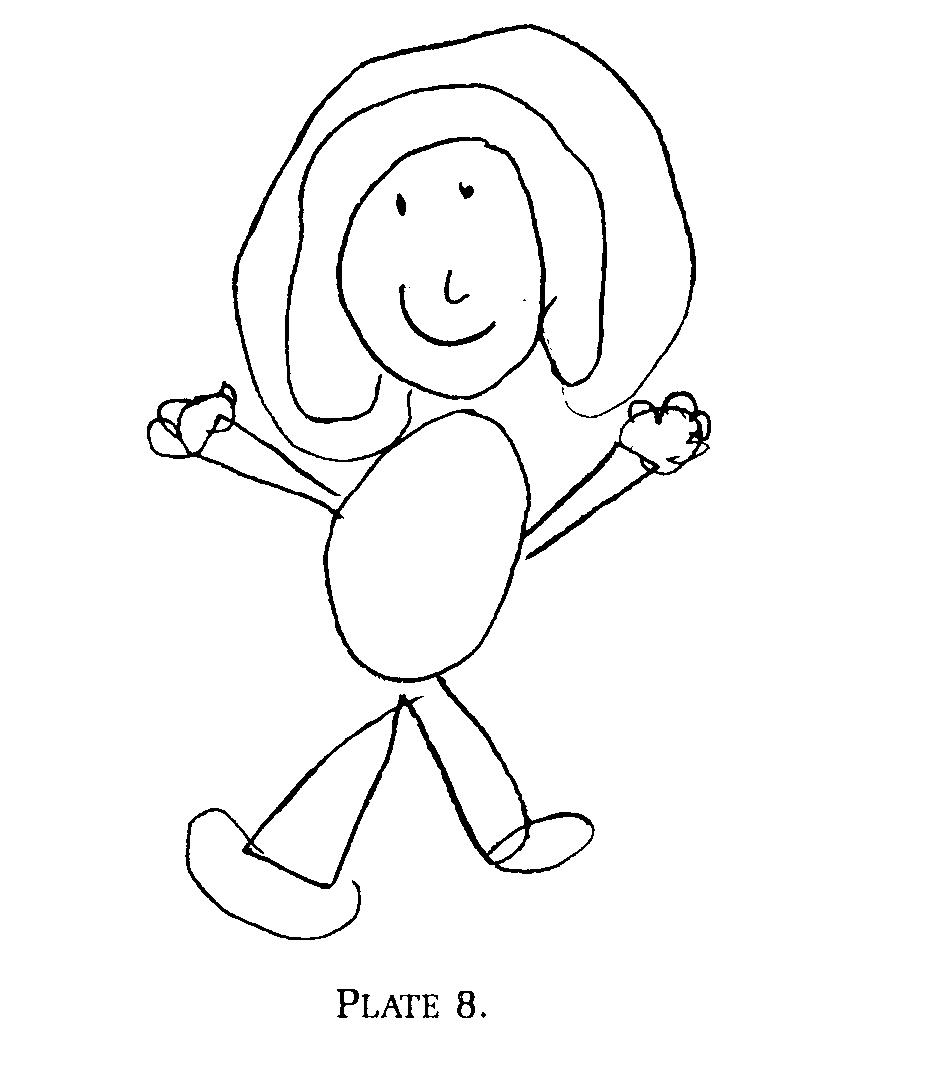

The difference between purposefully rejecting art and just creating “bad” art can be seen in the above two paintings. The first painting is by Hugo Ball, dada sound poem Gadli Beri Bimba . I think that his painting is a good example of purposefully rejecting the aesthetic criteria because it is obvious he has tried to make it very simple and dull. He has tried to ignore elements like line, value, color, shape, texture. Even though he has ignored them, there are still some elements there because no matter what all art will have some elements; it wouldn’t be art otherwise. The second painting however was drawn by a little kid who doesn’t have any idea what makes up the aesthetic criteria; the kid is just drawing for fun. He isn’t purposefully doing anything; he has just drawn a drawing of a little person. Even though Hugo Ball tried to ignore the aesthetic criteria, it’s still there which makes his painting trying to purposefully rejecting the aesthetic criteria while the second was just drawn for fun.


1 comment:
I agree with what Courtney says about how it’s almost impossible to reject the aesthetic criteria. She has a very valid point when saying otherwise it would not be art. Art is judged on that criteria, but the DADA artist were trying to make art that wasn’t, however they were still trying to make art. Therefore their work would have had to have been judged by it and followed it in some way. When a little kid draws something, he doesn’t think of the criteria but also includes element of it without him knowing it, so even without trying to ignore them they are included, which happens in the DADA art works as well so technically there is no real difference between DADA art and “bad art” they are both judged on the same scale.
Post a Comment